





















The 2025 AI Tech Stack Guide for E-commerce: Why It's Time to Ditch "Tool Patchworking" for Vertical Hubs
 Pic Copilot Team
If 2024 was the year of AI novelty, 2025 is the year of operational rationality.
According to a landmark report by McKinsey & Company, generative AI is projected to add billions of dollars in value to the retail sector annually.
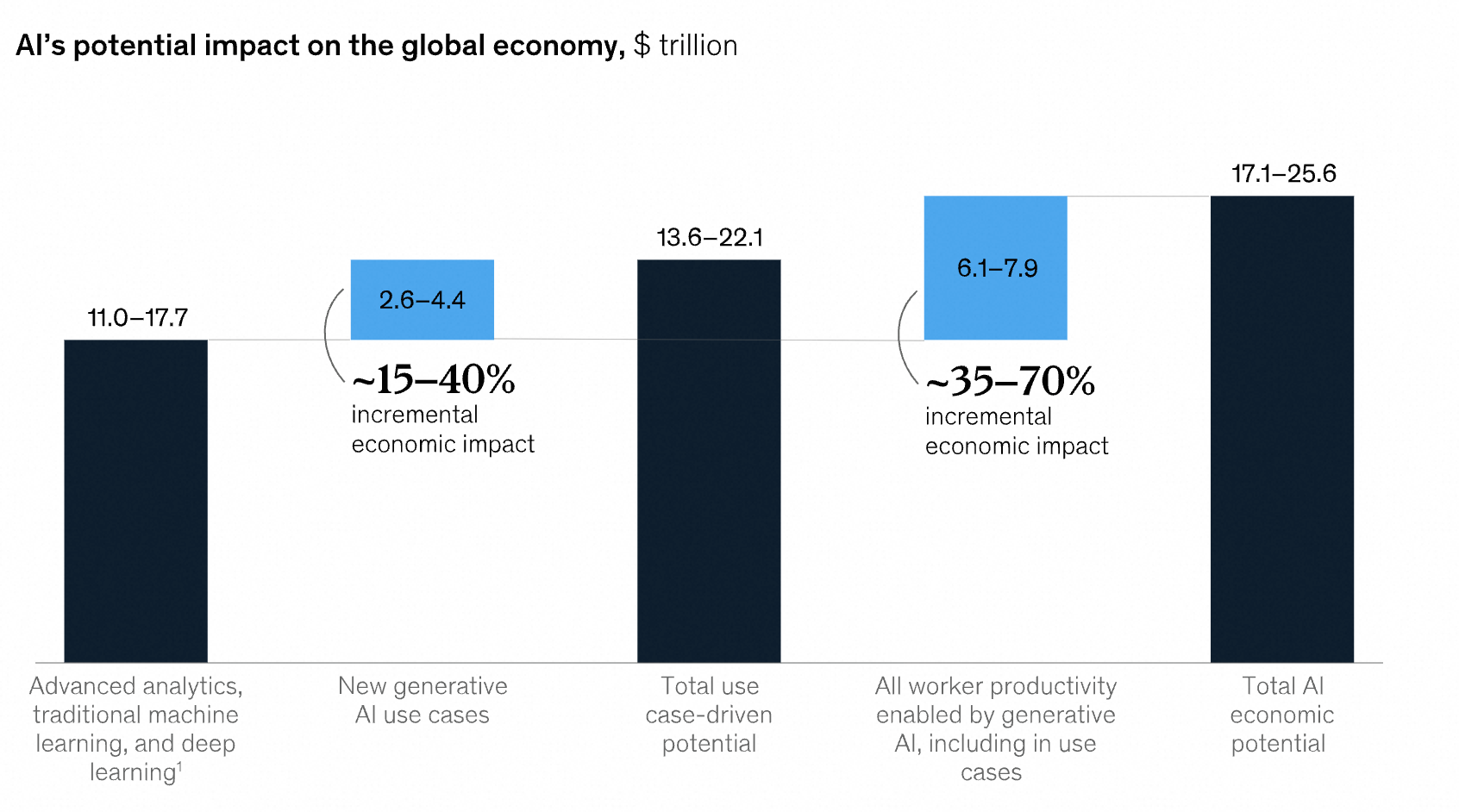
Source: McKinsey & Company – The economic potential of generative AI
However, for e-commerce sellers juggling product selection, ad spend, and logistics, this massive economic potential often feels disconnected from reality. Instead of profits, AI has brought "Tool Anxiety."
Take a look at your browser bookmarks: Midjourney for image generation, Runway for video, Photoroom for background removal, plus a dozen chrome extensions. According to HubSpot's State of Marketing Report, the average marketer switches between 12 different applications daily.
This "patchwork workflow" is silently killing your team's efficiency.
Today, leveraging the latest industry data, we analyze why the logic for selecting AI tools has shifted in 2025: Instead of hunting for ten "best-in-class" single tools, you need one "All-in-One Vertical Hub."
I. The Hidden Cost of "Fragmented AI"
Many sellers were initially dazzled by general-purpose AI (like Midjourney), only to hit a "Commercialization Wall" when trying to launch actual SKUs.
The biggest issue is the "Visual Disconnect."
Consumer research from Salsify reveals a harsh truth: 46% of consumers will abandon a brand if product images are inconsistent or confusing.
Imagine this: Your main listing image features a hyper-realistic model generated by Midjourney, but your A+ content uses inconsistent real-life shots, and your TikTok ads feature a completely different AI avatar. This "Frankenstein" visual experience destroys brand trust instantly.
Furthermore, Coresight Research reports that online apparel return rates have hit 24.4%, with "poor fit/mismatch with description" being the top reason. General AI tools often sacrifice physical accuracy for artistic flair—acceptable for art, but disastrous for e-commerce.
Sellers don't need an AI that can paint; they need an AI that understands merchandise.
II. The Three "Non-Negotiables" for AI Tools in 2025
When evaluating whether an AI tool can truly support your business, look beyond the flashy demos. Does it solve the three core problems that actually impact GMV?
1. Fluidity: Seamless "Image-to-Video" Workflow
In 2025, video is no longer optional; it is mandatory.
According to Wyzowl’s Video Marketing Statistics, 89% of consumers say video convinced them to buy a product. If your toolset only generates static images, you are leaving half your conversion potential on the table.
- The Standard: The tool must support Asset Recycling. A high-quality "Try-On" image generated for Amazon should be convertible into a 15-second vertical video for TikTok within the same platform, without requiring you to start from scratch in a separate video editor.
2. Localization: Global Adaptation at Low Cost
Cross-border commerce is about global reach. Research from CSA Research indicates that 76% of consumers prefer to buy products with localized characteristics (language and imagery).
Selling to Africa? You need Black models. Selling to Japan? You need Asian models.
- The Standard: A "Vertical Hub" must have a built-in Model Swap feature. This allows you to repurpose a single asset for global markets simply by adjusting parameters, rather than organizing new photoshoots.
3. Commercial Grade: Detail That Survives the Zoom
Data from Adobe suggests that high-definition images supporting "Zoom-in" functionality significantly increase dwell time on Product Detail Pages (PDP).
Many AI tools generate 1024px images that look artistic but become pixelated noise when zoomed in.
- The Standard: The platform must include integrated Upscalers (4K) and Image Enhancers. It must output finished, retail-ready assets, not low-res drafts.
III. The Evolution: The Rise of the "Vertical Tool Hub"
Driven by these pain points, the market is evolving from "Single-Point Tools" to "Vertical Tool Hubs."
Piccopilot is a prime example of this new breed of infrastructure, characterized by Modularity and Continuity.
It functions less like software and more like a Digital Photography Studio:
- Need to visualize a new SKU? The Fashion AI module handles virtual try-on for apparel, footwear, and accessories.
- Need TikTok traffic? It bridges the gap. You can take that exact try-on image and feed it into the Fashion Reels module to generate dynamic motion videos.
- Need post-production? It includes a full suite of commercial editing tools, from background removal to 4K upscaling.
The value of this "Hub Model" lies in dismantling the walls between software. Sellers no longer need to transfer huge files between Photoshop, video editors, and generative AI tools. One account drives the entire workflow from product launch to ad campaign.
IV. Conclusion: Let Tools Return to Business Logic
Gartner predicts that by 2026, over 80% of enterprises will have deployed generative AI applications.
However, the winners won't be the sellers who use the most tools, but those who have the smoothest workflows.
When you review your AI tech stack today, ask yourself: Is this tool saving me time, or am I spending more time learning how to use it?
Seek out platforms that offer End-to-End solutions. Look for hubs like Piccopilot that handle both the microscopic details (retouching) and the macroscopic strategy (video generation).
Delegate the tedious asset creation to AI, so you can focus your energy on what matters most: Strategy, Merchandising, and Growth.